Can Dental Crowns Improve Speech and Chewing?
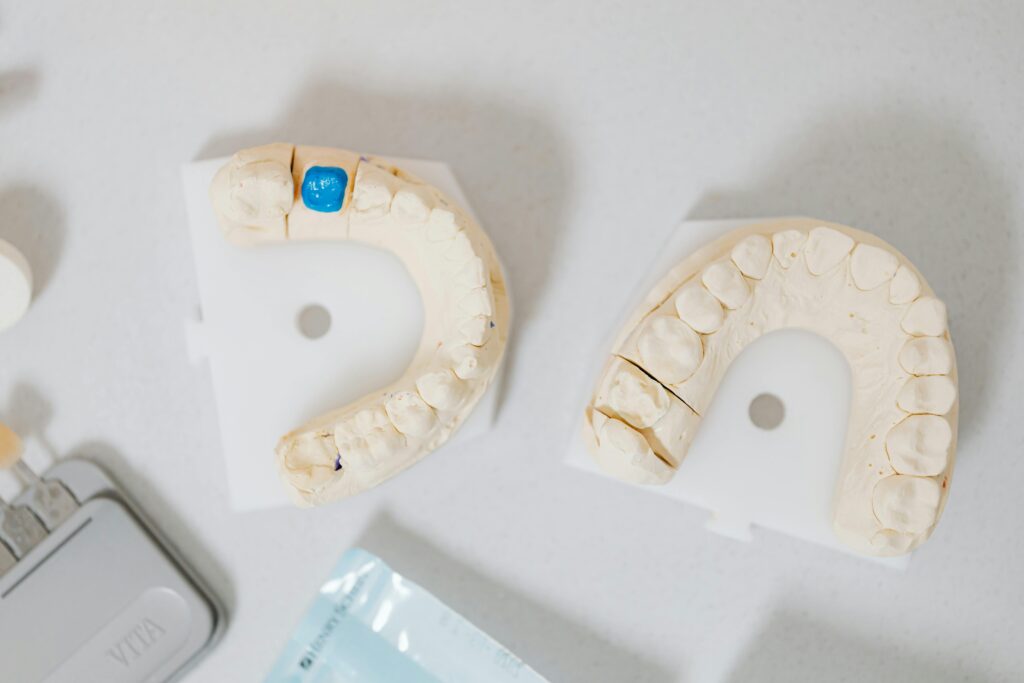
A dental crown is often discussed as a way to save a damaged tooth or improve its appearance, but function is where crowns quietly do some of their best work. Patients usually notice this in ordinary moments, not in the dental chair. A bite feels steadier. A sandwich stops catching on a broken edge. Words that once came out with a faint whistle or slur start to sound cleaner. Those changes can seem small from the outside, yet they matter deeply because speech and chewing are constant, automatic acts. When a tooth is cracked, heavily worn, misshapen, or weakened after root canal treatment, that automatic ease can disappear.
The short answer is yes, dental crowns can improve speech and chewing, but only when they are placed for the right reasons and shaped with real care. A crown is not a magic fix for every communication or bite problem. Speech depends on the tongue, lips, palate, airflow, jaw movement, and hearing habits. Chewing depends on muscles, joints, bite balance, tooth position, and the condition of the rest of the mouth. A crown can help tremendously when a damaged or poorly shaped tooth is disrupting that system. It can also create new problems if the contours or bite are off, even by a little.
That is why the discussion is worth slowing down. The effect of a crown on daily function comes down to anatomy, precision, and adaptation.
What a crown actually changes
A crown covers and restores the visible part of a tooth above the gumline. In practical terms, it gives the tooth a new outer shape and surface. That outer shape matters more than many people realize. Teeth are not just blocks for grinding food. They guide the jaw as it closes, support the cheeks and lips, influence airflow during speech, and provide contact points that help the tongue know where it is in the mouth.
When a back tooth loses a large filling, fractures, or wears down significantly, chewing can become inefficient and uncomfortable. People often adapt without realizing it. They chew on one side. They take smaller bites. They avoid crusty bread, steak, nuts, or raw vegetables. Over time, the jaw muscles may tighten on the overused side, and the neglected side may become less coordinated. Restoring the lost anatomy with a crown can bring back the proper cusps and grooves that grind food more effectively.
Front teeth play a different role. They cut food, yes, but they are also important in speech. The relationship between the upper front teeth, lower lip, and tongue affects sounds such as F, V, S, Z, T, and D. If one of those teeth is chipped, shortened, pushed out of place, or worn flat, pronunciation can change subtly or noticeably. A properly designed crown can restore the length, edge position, and contour that speech relies on.
Why chewing often improves first
Most patients who Dental Crowns need a crown feel the chewing improvement before they notice anything else. That is because damaged teeth interfere with biting in obvious physical ways. A cracked molar may send a sharp jolt when pressure lands in one spot. A heavily filled tooth may flex enough to feel unreliable. A tooth with missing structure may not contact its partner correctly, so food escapes the grinding surfaces instead of being broken down.
A well-made crown restores form and distributes force more evenly. This is one of the most important functional benefits. Natural chewing is not just about bringing teeth together. It is about bringing them together in a controlled path, with contact points that are stable but not excessive. If a tooth is too low, it does not contribute much. If it is too high, it takes too much force and can make the whole bite feel wrong. When the height and contour are correct, the jaw closes more smoothly and food is processed more efficiently.
I have seen this most clearly in patients with one broken-down first molar. That tooth is a workhorse. When it is compromised, people often report that they can technically still chew, but meals become slower and more tiring. After a crown, they describe the restored tooth as feeling like it has "joined the team again." That is not technical language, but it is accurate. The tooth is contributing normal function instead of forcing nearby teeth and muscles to compensate.
There is also a protective effect. If chewing has become painful, people often clench or shift their jaw to avoid pressure on the sore side. That protective habit can strain muscles and make the problem seem larger than the tooth itself. Once the crown restores a stable, comfortable surface, the jaw often settles down.
Speech is more delicate, but crowns can help
Speech changes related to teeth can be subtle enough that only the patient notices them. Others hear a slight lisp, a whistle, or a fuzziness on certain consonants. Sometimes no one else notices at all, but the speaker feels that their words are less crisp. That perception matters. Speech is deeply personal, and even minor changes can affect confidence.
Crowns can improve speech when the original tooth shape was interfering with normal sound production. This is most relevant for the front teeth and, to a lesser extent, the premolars. The tongue uses the front teeth as landmarks. The lower lip contacts the upper front teeth to form sounds like F and V. The narrow passage between tongue and teeth helps shape S and Z sounds. If a front tooth is too short from wear, chipped at the edge, or rotated in a way that changes airflow, a crown can restore a more favorable contour.
A common example is a person with severe wear on the upper front teeth. When enamel erodes or grinds away over the years, those teeth can become shorter and flatter. That changes not only the smile but the speaking edge of the teeth. Words may start to sound duller or less precise. Restoring the proper length with carefully planned crowns can sharpen speech again, though the adaptation period matters.
That last point is important. Even a beneficial change can feel strange at first. The mouth is extremely sensitive to small differences. A crown that adds one millimeter of length to a front tooth may be exactly what is needed functionally, yet the tongue may spend several days or a couple of weeks relearning certain movements. This is not a sign that something is wrong. It is the brain updating its map of the mouth.
When a crown can make speech feel worse, at least temporarily
Honesty matters here. Not every crown feels perfect on day one, especially in the front of the mouth. A new crown may initially seem bulky, slick, or too prominent behind the front teeth. That can affect S sounds more than anything else. Patients sometimes describe a slight lattle, whistle, or Dental Crowns lisp after placement. Often this improves as the tongue adapts. Sometimes it improves after a small adjustment by the dentist. Occasionally it means the contour needs more substantial refinement.
The back surface of an upper front crown is particularly important for speech. This surface guides the tongue during many sounds. If it is too thick or angled incorrectly, the tongue may strike it too early or too heavily. The result can be altered airflow and distorted consonants. This is why cosmetic work and functional work cannot be separated neatly. A crown may look attractive from the front and still need careful attention to the inside surface.
For patients whose profession depends on precise speech, this should be discussed in advance. Teachers, broadcasters, lawyers, singers, and sales professionals tend to notice minor phonetic changes quickly. They are not being fussy. Their sensitivity is often exactly what allows a dentist to fine-tune the result. In those cases, trying in a provisional crown first can be invaluable because it gives the patient a chance to test speech in real life before the final crown is made.
The fit, the bite, and the contours matter more than the material
People often ask whether porcelain, zirconia, metal-ceramic, or gold is best for chewing and speech. Material matters, but not in the way many assume. For function, the design and fit of the crown usually matter more than the brand or buzzword attached to it.
A well-contoured zirconia crown can feel excellent. So can a porcelain-fused-to-metal crown. A gold crown on a molar can be one of the most forgiving and durable restorations for chewing, though it is rarely chosen today for visible areas. The key issue is whether the crown reproduces the right anatomy and contacts the surrounding teeth appropriately.
For chewing, the chewing surface has to be neither too flat nor too sharp. Teeth need anatomy, but exaggerated anatomy can create interferences. For speech, especially in the front, the edge position and palatal contour must harmonize with lip and tongue movement. For comfort, the crown margin must fit closely so the gum can tolerate it and food does not trap excessively.
There is also the issue of occlusion, the way upper and lower teeth meet. Even a beautifully made crown can feel wrong if it hits before the other teeth do. Patients sometimes describe this as feeling like "that tooth is all I can feel." They may also notice jaw fatigue, temple tension, or a sense that their bite has shifted. These symptoms are often correctable with adjustment, but they should not be dismissed.
Crowns and chewing efficiency after root canal treatment
Many teeth that receive crowns have had root canal treatment. That changes the conversation a little. A root-treated tooth is not dead in the everyday sense, but it does lose internal vitality and can become more brittle over time, particularly if it has already lost a lot of tooth structure. The crown helps protect that tooth from fracture by holding the remaining structure together.
Patients with root canal treated molars often say they did not realize how cautiously they had been chewing until the crown was placed. Before the crown, the tooth may have felt fragile even if pain was gone. After the crown, they can use that side with much more confidence. This confidence matters because hesitant chewing is inefficient chewing. If the brain perceives a tooth as risky, it will recruit protective patterns that limit force and alter rhythm.
Still, the crown does not make the tooth indestructible. Hard ice, popcorn kernels, and parafunctional habits like clenching remain concerns. The restoration supports chewing, but it works best as part of a mouth that is managed thoughtfully.
Front teeth, pronunciation, and the importance of trial restorations
When a crown is being placed on a front tooth, especially one that changes the tooth’s length or position, temporary crowns are more than placeholders. They are functional previews. A temporary lets the patient speak, eat, smile, and report back. Does the F sound feel natural? Are S sounds crisp? Does the tooth catch the lower lip? Does the edge feel too long when biting into a sandwich?
This step can reveal things that photographs and models do not fully capture. A crown may look ideal on a cast but still feel slightly too full to the tongue in real use. A patient may notice that reading aloud feels different, or that certain words become effortful. Those observations help refine the final shape.
One memorable pattern, seen often enough to be worth mentioning, involves patients who have lived for years with a chipped or worn front tooth. They adapt their speech around it without realizing it. Once the tooth is restored, they may feel "off" for a week because the old compensation is no longer needed. Then, almost suddenly, speech settles and sounds more natural than before. The adjustment was not a failure. It was the nervous system catching up to improved anatomy.
What crowns cannot fix on their own
A crown can only solve problems that relate to tooth structure, shape, and bite support. It cannot correct every speech issue or every chewing difficulty.
If speech problems stem from tongue posture, neurological conditions, hearing loss, poorly fitting dentures, severe jaw discrepancies, or a palate issue, a crown may have little effect. In some cases, speech therapy, orthodontics, or multidisciplinary care is more relevant.
The same goes for chewing. If pain arises from the temporomandibular joint, advanced gum disease, unstable dentures, or widespread bite collapse, placing a single crown may help one part of the puzzle without resolving the bigger pattern. Patients sometimes hope that restoring one tooth will make the whole bite feel perfect. Sometimes it does, particularly if one damaged tooth was the main disruptor. Sometimes it reveals how much strain the rest of the system has been carrying.
That is why a careful exam matters. The dentist should look not only at the tooth to be crowned but also at the neighboring teeth, the opposing tooth, wear facets, gum support, jaw motion, and any clenching habits.
Signs a crown may be helping function
Most functional success shows up in ordinary life. Patients rarely say, "My occlusal morphology has been restored." They say lunch is easier. Their cheek is not getting bitten. They are no longer avoiding one side. Speech sounds less slushy on recordings. The crown stops drawing attention to itself.
A few practical signs tend to matter most:
- chewing feels more even, with less need to shift food to one side
- pressure on the restored tooth feels stable rather than sharp or wobbly
- words involving S, F, V, T, or D sound clearer when a front tooth was the problem
- the jaw feels less tired because the bite is no longer dodging a weak or damaged tooth
- food catches less often around the restored area because the shape and contact are improved
Those improvements may appear within days, though complete adaptation can take longer. Front crowns usually demand more patience than back crowns because the tongue is such a discriminating judge.
The adaptation period is real
People are often surprised by how sensitive the mouth is to tiny changes. A hair caught between two teeth feels huge. A crown that is even slightly proud in the bite can dominate the whole mouth. That sensitivity is frustrating when a crown feels odd, but it is also why good adjustments can make such a dramatic difference.
For chewing, adaptation is usually quick if the bite is correct. For speech, especially with upper front crowns, adaptation can range from a few days to a few weeks. During that time, reading aloud can actually help. It gives the tongue repeated, precise practice against the new surfaces. Patients who quietly wait for the mouth to adapt sometimes take longer than those who use the tooth actively and attentively.
That said, not every issue should be "waited out." If a crown feels high when biting, causes jaw soreness, traps food persistently, or distorts speech in a way that is not improving, it should be reassessed. Dentists expect follow-up adjustments. This is part of good care, not a sign of failure.
Questions worth asking before getting a crown
The best crown outcomes usually start with a better conversation, not a fancier material. If speech or chewing is already a concern, it helps to say that clearly before treatment begins. Many patients focus on pain or appearance and mention functional changes only afterward.
A few questions can sharpen the plan:
- Is this crown mainly for protection, or will it also change the shape of my bite or front teeth?
- Will the temporary crown let me test speech and chewing before the final one is made?
- If my tooth is in the front, how will you manage length and inside contour to protect pronunciation?
- Do you see signs that clenching, grinding, or a broader bite issue could affect the result?
- What should feel normal right away, and what might take a couple of weeks to adapt to?
These questions often lead to better expectations, and expectations matter. A patient who knows a front crown may feel different for a week is less likely to panic over a temporary lisp. A patient who knows that a molar crown should not feel high is more likely to seek a simple adjustment promptly.
The role of bite adjustment after placement
There is a tendency to think of crown placement as the finish line. In practice, it is often the start of a short refinement period. The dentist checks the bite with articulating paper, but the real proof is how the crown behaves when the patient eats, talks, and clenches lightly in everyday life.
A tiny adjustment can change everything. If a molar crown is carrying too much force on one incline, chewing may feel tender or unnatural. If the lingual contour of a front crown is slightly bulky, the tongue may struggle with sibilants. These are not dramatic flaws, yet the mouth magnifies them. The best results often come from careful feedback and equally careful refinement.
Patients sometimes feel awkward reporting that their speech sounds strange or that one bite point feels off. They should not. Detailed feedback is useful, especially with Dental Crowns that alter visible or highly functional teeth. Dentistry is measured in fractions of millimeters, and patient perception is one of the most sensitive instruments in the room.
Long-term function depends on the whole mouth
Even an excellent crown has limits if the surrounding conditions are poor. Heavy nighttime grinding can wear or fracture restorations. Gum recession can expose margins. Shifting teeth can alter contacts. A missing tooth elsewhere can overload the crowned tooth because chewing forces redistribute in ways patients do not notice.
When a crown is part of a larger restorative plan, functional gains are often more dramatic. For example, restoring a worn molar helps, but restoring several worn posterior teeth may transform chewing comfort. Likewise, a single front crown can improve pronunciation when one chipped edge is the culprit, but multiple front restorations may be needed if wear has changed the speaking plane across the smile.
Maintenance matters too. A crown does not get cavities, but the tooth underneath can decay at the margin if plaque control is poor. Inflamed gums can also make any restoration feel less comfortable and more difficult to clean. Function and hygiene are closely linked.
So, can dental crowns improve speech and chewing?
They can, often very effectively, when the problem is rooted in damaged tooth structure, lost anatomy, poor contours, or an unstable bite. For chewing, crowns commonly restore efficiency, comfort, and confidence, especially on heavily damaged back teeth. For speech, the benefits are most evident when front teeth have been chipped, worn, or misshapen in ways that alter airflow or lip and tongue contact.
The caveat is that success depends on precision. A crown is not just a cap. It is a carefully shaped part of a living system. Get the shape, length, bite, and contour right, and the result can feel natural enough that the patient forgets it is there. Get those details wrong, and even a beautiful crown can interfere with speaking and eating.
That is why the best functional crown work rarely announces itself. It simply returns ordinary abilities that had become strained, awkward, or guarded. You chew without thinking. You speak without monitoring every sound. The tooth stops being a problem, and that quiet normality is often the clearest sign that the crown is doing its job well.
Omni Dental Specialty
1690 E Gonzales Rd, Oxnard, CA 93036, United States
+1 805-410-9603
FAQ About Dental Crowns
How long do crowns last on teeth?
A dental crown often lasts about five to fifteen years, although some last longer. Material, the underlying tooth, oral hygiene and grinding habits affect longevity. Regular dental examinations help identify wear, decay or a loose crown; no lifespan is guaranteed.
How much does a tooth crown cost?
There is no single price for every crown. Material, laboratory work, the condition of the tooth and any additional treatment affect the fee. Ask for a written estimate and confirm your insurance benefits, exclusions and out-of-pocket costs before treatment.
What is the downside of crowns on teeth?
A conventional crown usually requires irreversible removal of some tooth structure. Possible problems include sensitivity, chipping, loosening and decay at the crown margin; some teeth later need root canal treatment. Discuss your tooth's condition, material choices and suitable alternatives with your dentist.