The Difference Between Permanent and Temporary Dental Crowns
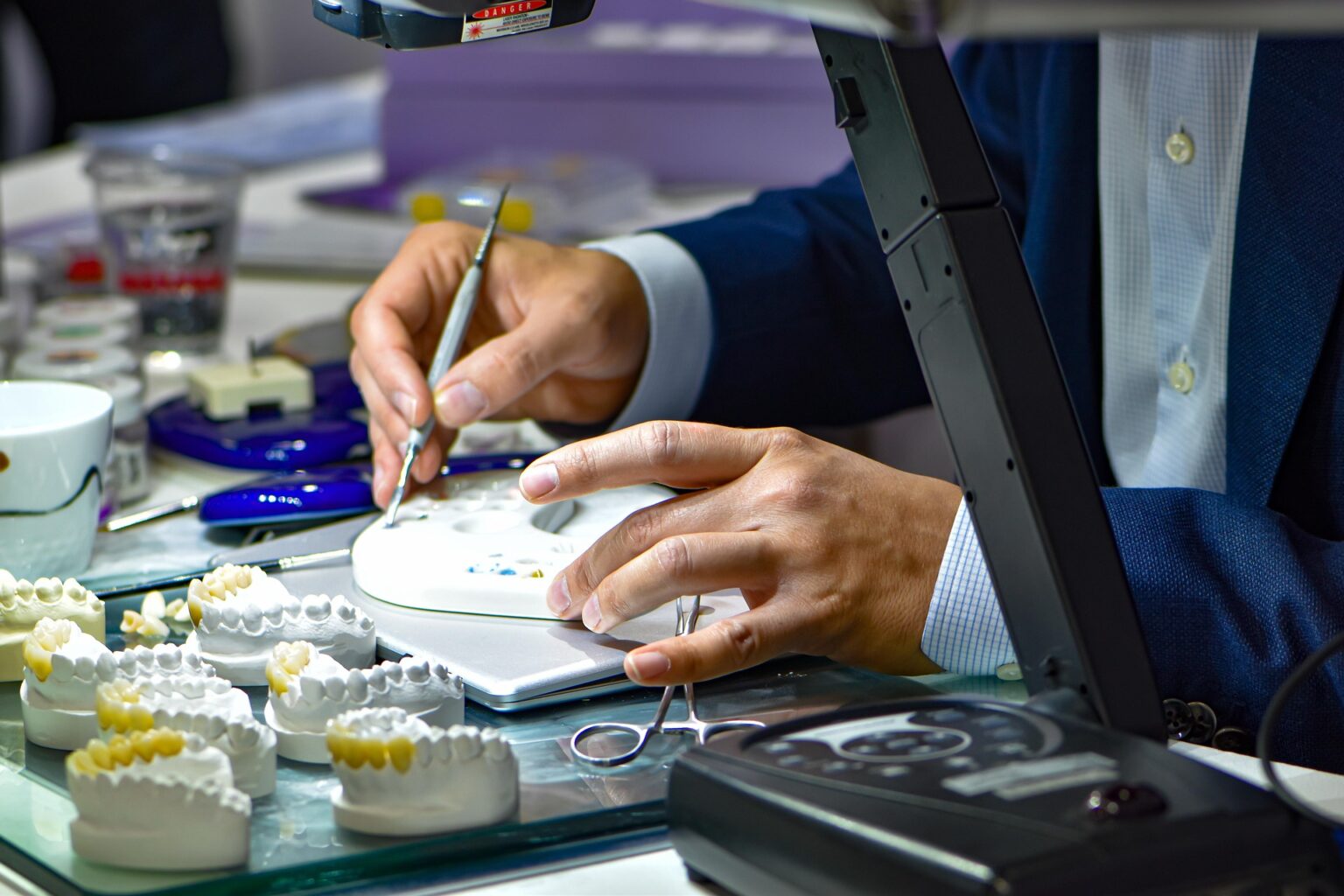
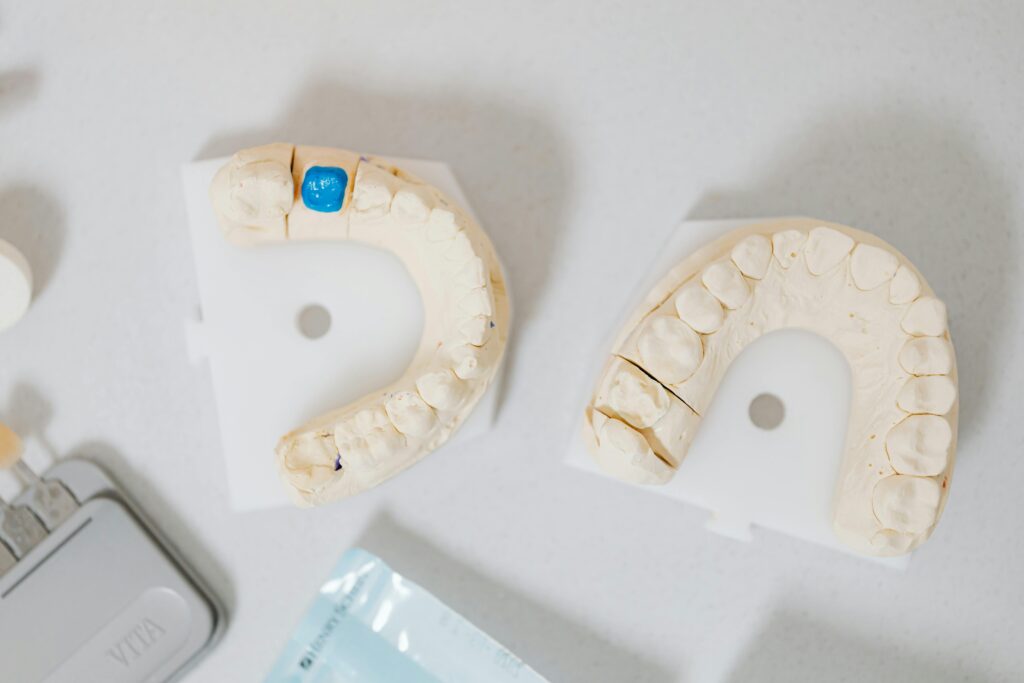
If you have ever been told you need a crown, the first surprise is often that you are getting two of them, not one. The final crown is the one most people picture, a strong, tooth-shaped restoration made to last for years. Before that goes in, many patients wear a temporary crown for a short stretch, sometimes a couple of weeks, sometimes a little longer. That interim phase can feel confusing, especially when the temporary looks like a crown, feels like a crown, and sits on the tooth like a crown. It is easy to assume the only difference is timing.
In practice, temporary and permanent dental crowns serve very different purposes. They are made from different materials, attached in different ways, and expected to perform at very different levels. Understanding that distinction can save you a lot of frustration, and in some cases prevent damage to the tooth that is being restored.
A crown, at its core, is a cap that covers a damaged, weakened, or heavily restored tooth. Dentists recommend crowns after large cavities, root canal treatment, fractures, worn enamel, or when a tooth needs support that a filling cannot reliably provide. The temporary crown protects the prepared tooth while the permanent crown is being designed and fabricated. That simple sentence captures the broad idea, but it does not explain why one crown can come off with a sticky piece of caramel and the other can hold up through years of chewing.
Why the temporary crown matters more than most patients realize
Once a tooth is prepared for a crown, it is no longer in its original shape. The dentist removes structure to create room for the final restoration. That prepared tooth can be sensitive to temperature, vulnerable to movement, and more likely to trap food along the gumline if left uncovered. A temporary crown stands in as a short-term shield.
That shield has several jobs at once. It covers exposed dentin, reduces sensitivity, helps you chew with some comfort, and keeps neighboring teeth from drifting into the space. It also maintains the general contour for the gums. Gum tissue is not passive. It responds quickly to changes. If a tooth sits uncovered for too long, the soft tissue can swell or shift, which may complicate the fit of the permanent crown later.
Patients sometimes treat the temporary as disposable because they know it is not the final product. Clinically, that mindset can create trouble. A temporary crown is not meant to be babied to the point of panic, but it does need a little respect. If it cracks, loosens, or comes off and stays off, the prepared tooth can become sore, and the final appointment may turn into a remake instead of a simple cementation.
I have seen this happen in ordinary situations. A patient does everything right except chew ice out of habit. Another flosses aggressively, snaps the floss upward, and lifts the temporary off in one motion. A third waits several weeks beyond the planned seat date because life gets busy, then returns with a tooth that has shifted just enough to make the permanent crown feel tight or high. None of those situations are dramatic, but they are common.
What makes a temporary crown temporary
Temporary crowns are usually made from acrylic-based or composite resin materials. The dentist may shape them directly in the office during your appointment, or a lab may fabricate them depending on the case. Either way, the material is selected for speed, ease of adjustment, and short-term function, not for maximum durability.
That choice affects almost everything about the patient experience.
Temporary material tends to be less strong than porcelain, zirconia, or metal-based permanent crown materials. It can wear faster, chip more easily, and feel a bit bulkier or less refined around the edges. The surface polish is usually decent, but not as smooth and glass-like as a final ceramic crown. Color matching is often acceptable rather than exact. For a front tooth, a good temporary can look surprisingly natural, but dentists and patients alike know it is a placeholder.
The cement used for temporary crowns is also intentionally weaker. That sounds counterintuitive until you consider the next appointment. The dentist needs to remove the temporary without harming the underlying tooth. Temporary cement is designed to hold the crown in place under normal function while allowing clean removal later. That balance is useful, but it also explains why temporary crowns can loosen.
Fit is another important distinction. A well-made temporary should fit comfortably and protect the tooth, but it is not expected to have the same precision as a laboratory-fabricated permanent crown. The margins, the points where the crown meets the tooth, are managed carefully, yet they are still part of a short-term solution. Slight roughness or a less-than-perfect contour may be acceptable for two weeks, but not for ten years.
What makes a permanent crown permanent
The permanent crown is built for a different standard. It is made to restore function, seal the tooth more precisely, and withstand long-term chewing forces. Depending on the location of the tooth, bite pattern, cosmetic goals, and budget, the material may be all-ceramic, porcelain fused to metal, full metal, or zirconia. Each option has strengths and limitations, and the best choice often depends on the specific tooth.
A molar that absorbs heavy chewing pressure may benefit from a material known for strength. A front tooth, where light transmission and color nuance matter, may call for a ceramic with excellent esthetics. A patient who grinds their teeth at night presents a different set of priorities than someone with a stable bite and no wear pattern. This is where dentistry is less about categories and more about judgment.
Permanent crowns are either fabricated by a dental laboratory or milled in-office with CAD/CAM systems when the practice has that technology. In either workflow, the goal is a highly accurate fit. The crown should meet adjacent teeth correctly, contact the opposing tooth in a controlled way, and sit at the margin with as little discrepancy as possible. Tiny differences matter here. A crown that is slightly high can make a tooth feel sore for days. A contact that is too loose can trap food. A margin that is poorly adapted can raise the risk of recurrent decay or gum irritation.
The cementation is also more definitive. Some crowns are bonded with adhesive systems. Others are cemented with conventional luting materials, depending on the crown type and the tooth. Unlike temporary cement, permanent cements are chosen for retention, seal, and longevity.
The biggest practical differences patients notice
For most people, the contrast becomes obvious in daily life. Temporary crowns can feel a little fragile or unfamiliar. Permanent crowns generally disappear into the bite after a short adjustment period, assuming the fit is right.
A few differences come up again and again in the chair:
- Temporary crowns are more likely to feel slightly rough, bulky, or less polished.
- Permanent crowns usually match the bite and neighboring teeth more precisely.
- Temporary crowns are attached with weaker cement and can come loose.
- Permanent crowns are made from stronger materials intended for years of use.
- Temporary crowns often have acceptable esthetics, while permanent crowns aim for a more exact shape and shade.
Even that list needs context. A carefully made temporary on a front tooth can look very Dental Crowns good, and a poorly adjusted permanent crown can still feel wrong until corrected. Quality depends on both materials and execution. Still, the broad pattern holds true.
Why you should not judge the final result by the temporary
This is one of the most important counseling points in crown treatment. Patients often worry when the temporary feels awkward or does not look perfect. In many cases, that is not predictive of the final outcome.
A temporary crown is shaped under time pressure and with short-term priorities in mind. The permanent crown is created from an impression or digital scan, then refined with anatomy, contours, contact points, and shade considerations that are simply not part of a quick provisional. Think of it less like the finished room and more like the protective covering used during renovation. It serves a purpose, but it is not what you will live with.
That said, the temporary phase can provide useful information. If the temporary crown feels too long, too short, too full, or changes your speech on a front tooth, tell your dentist. That feedback can help refine the permanent version. This is especially relevant for cosmetic cases or for teeth that guide the bite during side-to-side movement. A temporary is not just a placeholder. In some cases, it is a preview, though an imperfect one.
When a temporary crown causes problems
Most temporary crowns do their job quietly. A minority create inconvenience, and usually for understandable reasons. The prepared tooth may be short or heavily damaged, making retention harder. The patient may have a deep overbite, a clenching habit, or a diet full of sticky foods. Some teeth are simply harder to provisionalize well, especially if a large portion of the original crown structure is already missing.
Sensitivity is one common complaint. Mild sensitivity to cold or pressure is not unusual with a temporary crown, particularly in the first few days. The tooth has been cut, the nerve inside is still alive in many cases, and the temporary material does not insulate as well as a final crown may. Sharp, lingering pain is a different matter and should be evaluated.
Another issue is the crown coming off. Patients often assume the dentist did something wrong. Sometimes that is true, but often it is the predictable downside of using a retrievable cement on a short-term restoration. If the temporary comes off cleanly, it can frequently be recemented. What matters most is what happened after it came off. If the patient puts it in a napkin and forgets it for a week, the tooth can move enough to turn a simple fix into a longer appointment.
Food packing is also common if the temporary contour is not ideal or if the contact point with the adjacent tooth is light. This can irritate the gums and make the area feel tender. Again, that does not necessarily mean the permanent crown will have the same problem, but it is worth mentioning promptly.
What patients should and should not do while wearing a temporary crown
A temporary crown does not require a liquid diet or weeks of anxiety. It does require common-sense modifications. Sticky candies, chewing gum, hard nuts, and ice are poor choices during this period. If the crown is on one side, many patients naturally shift heavier chewing to the other side for a few days. That is reasonable.
Brushing should continue as usual, but flossing takes a little finesse. Instead of pulling the floss straight back up between the teeth, it is often safer to slide it out to the side. That reduces the chance of catching the edge of the temporary and lifting it off. Your dentist may give specific instructions based on the tooth and the type of temporary used.
Call the office if any of the following happens:
- The temporary crown comes off or feels loose.
- You develop strong pain, swelling, or pain when biting.
- The bite feels so high that you keep hitting that tooth first.
- The crown cracks badly or a large piece breaks away.
- The gums around it become increasingly swollen or bleed heavily.
Patients sometimes try to “wait it out” because the permanent appointment is only a few days away. That can work for a mildly annoying rough spot. It is a poor strategy for a loose temporary or a bite problem that keeps traumatizing the tooth. Small fixes are easier when addressed early.
How long each type of crown is meant to last
Temporary crowns are designed for short-term use, generally a couple of weeks, though they may remain in place longer in certain cases. A complex cosmetic or full-mouth rehabilitation case can involve provisional crowns for much longer, but those are often made to a higher standard than the average single-tooth temporary. They are still provisional, just more sophisticated.
Permanent crowns are expected to last years, often well over a decade with good care, though no dentist can promise a precise lifespan. The range depends on the tooth, the material, bite forces, oral hygiene, and habits like grinding or nail-biting. Crowns do not get cavities themselves, but the tooth underneath can decay at the margin if plaque control is poor. Gum disease can also compromise a crowned tooth just as it can a natural one.
One practical point surprises many patients: a crown may fail even when the visible porcelain still looks fine. The underlying tooth can fracture, recurrent decay can develop near the edge, or the cement seal can break down over time. Longevity is about the entire system, not just the visible cap.
The lab side of the story patients rarely see
From the patient chair, the gap between appointments can feel like waiting. In the lab or digital workflow, a lot happens during that interval. The final crown is not just printed or pressed out in a generic shape. The restoration is designed to fit the scan or model of the prepared tooth, the neighboring contacts, and the opposing bite. Shade selection may be simple for a back tooth and surprisingly nuanced for a front tooth, where translucency, internal characterization, and surface texture affect whether the crown blends in or announces itself.
This is part of why permanent crowns cost more and take longer. The process combines clinical preparation, records, fabrication, adjustments, and final delivery. A temporary crown bypasses most of that complexity because it is not intended to solve the problem forever. It just has to preserve the situation long enough for the definitive work to be done well.
Edge cases that change the usual pattern
Not every crown process follows the classic two-step model. Some offices offer same-day crowns. In those cases, the tooth is prepared, scanned, milled, adjusted, and cemented in one visit. Depending on the timing and office workflow, you may skip the temporary crown entirely. That can be very convenient, though not every case is suited to same-day treatment.
There are also situations where a dentist may intentionally extend the temporary phase. If the tooth has an uncertain prognosis, if the bite needs to be tested, or if esthetic changes are being evaluated, a provisional crown can serve as a trial restoration. This is common in more advanced reconstruction cases. Here, the temporary is still not the final material, but it plays a larger diagnostic role.
Children and teenagers occasionally receive stainless steel crowns or other interim restorations that are “temporary” in the broader sense, but those are a different category from the standard adult temporary crown placed while waiting for a lab-fabricated permanent one.
Cost, convenience, and the hidden value of doing both steps properly
Some patients ask whether they can skip the temporary crown to save money or hassle. In a traditional crown workflow, that is rarely a good idea. The temporary is part of protecting the investment you are already making in the permanent restoration. Without it, the prepared tooth can become sensitive, shift position, or develop gum changes that undermine the fit of the final crown.
The reverse mistake also happens. A patient grows accustomed to the temporary crown and delays the final seat because the tooth “feels fine.” That can backfire. Temporary materials are not meant for long service under full chewing stress, and temporary cement is not intended to hold indefinitely. The longer the delay, the higher the odds of breakage, leakage, or tooth movement.
Good crown treatment is often quiet dentistry. The ideal sequence does not produce drama. The temporary protects the tooth, the permanent crown fits as intended, the bite is adjusted as needed, Dental Crowns and after a short adaptation period the patient stops thinking about that tooth altogether. When that happens, it can seem simple. In reality, it is the result of respecting the difference between a short-term solution and a long-term one.
What to remember if you are in the middle of crown treatment
Temporary and permanent dental crowns may look similar at a glance, but they are built for entirely different jobs. One buys time and protects the tooth during a vulnerable interval. The other restores strength, function, and appearance for the long haul. Confusing the two leads to the most common problems, whether that means overreacting to a temporary that does not look perfect or underreacting to a temporary that comes loose.
If you are currently wearing a temporary crown, think of it as a carefully placed placeholder, useful, necessary, and limited by design. Eat a bit more thoughtfully, clean around it with care, and keep your follow-up appointment. If you are heading in for the permanent crown, expect a restoration that should fit better, feel stronger, and ask less of you day to day.
That difference is the whole point.
Omni Dental Specialty
1690 E Gonzales Rd, Oxnard, CA 93036, United States
+1 805-410-9603
FAQ About Dental Crowns
How long do crowns last on teeth?
A dental crown often lasts about five to fifteen years, although some last longer. Material, the underlying tooth, oral hygiene and grinding habits affect longevity. Regular dental examinations help identify wear, decay or a loose crown; no lifespan is guaranteed.
How much does a tooth crown cost?
There is no single price for every crown. Material, laboratory work, the condition of the tooth and any additional treatment affect the fee. Ask for a written estimate and confirm your insurance benefits, exclusions and out-of-pocket costs before treatment.
What is the downside of crowns on teeth?
A conventional crown usually requires irreversible removal of some tooth structure. Possible problems include sensitivity, chipping, loosening and decay at the crown margin; some teeth later need root canal treatment. Discuss your tooth's condition, material choices and suitable alternatives with your dentist.